
VRF
- Home
- VRF

Why VRF
With our VRF systems, you significantly reduce your operating costs with energy efficient climate solutions.
We promise you:
- A wide range of trusted VRF brands
- Superior performance
- Premium comfort
- Automation manage your home environment through your smartphone, infrared remote control, or via Alexa or Google Home
- Design flexibility
- NO NEED to install a heating system
- Lower electricity bills
What is VRF
Variable refrigerant flow, referred to as a VRF system, is a technology that circulates only the minimum amount of refrigerant needed during a single heating or cooling period. The mechanism introduced the opportunity for the end user to individually control several air conditioning zones at one time
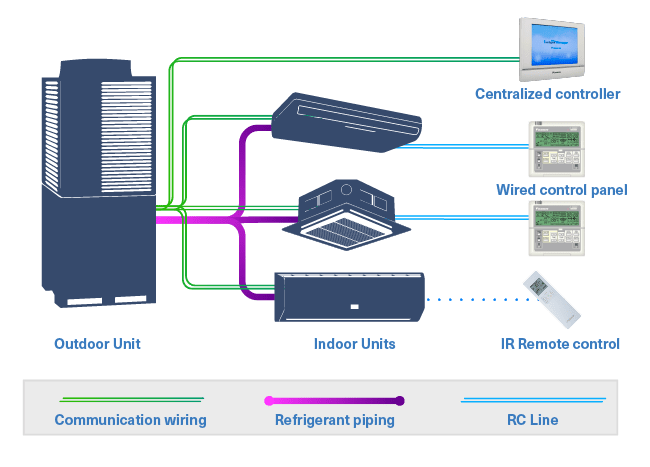
Complete Control Solutions
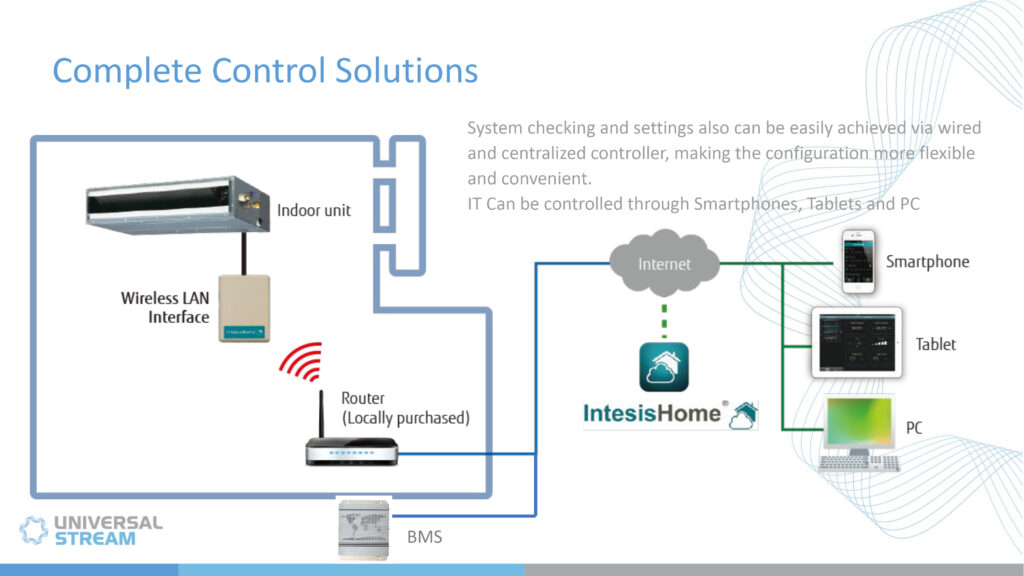
Wide Indoor Units Range
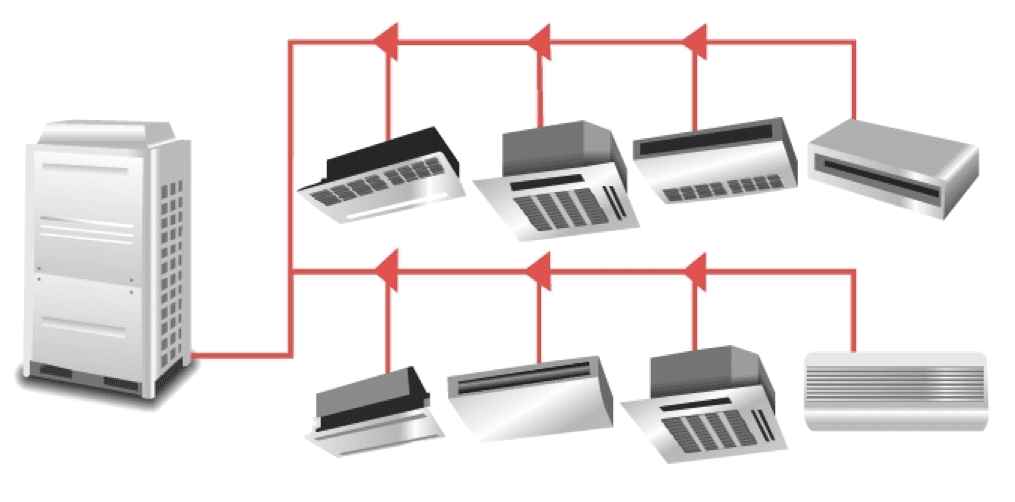
We Provide Premium Cooling & Heating Services
Wide Indoor Units Types & Capacities
-
Two-way Cassette
A two-way cassette air conditioner is a type of HVAC system that is typically used for commercial or industrial settings. It consists of an indoor unit, known as the cassette, which is installed in the ceiling, and an outdoor unit that is connected to the cassette via refrigerant lines.
-
Four-way Cassette
A four-way cassette air conditioner is a type of HVAC system that is similar to a two-way cassette, but with the added feature of being able to direct airflow in four different directions. The indoor unit, known as the cassette, is installed in the ceiling and is connected to an outdoor unit via refrigerant lines.
-
Ceiling & Floor
Ceiling air conditioners are HVAC systems installed in the ceiling of a room, typically used in commercial or industrial settings to cool or heat large spaces. Floor air conditioners are portable units installed on the floor, typically used in residential settings to cool or heat smaller spaces. Ceiling air conditioners are more powerful but more expensive, while floor air conditioners are more affordable and easy to install.
-
Wall-mounted
Wall-mounted air conditioners are HVAC systems that consist of an indoor unit installed on a wall and an outdoor unit connected via refrigerant lines. They are commonly used in both residential and commercial settings, are easy to install and energy-efficient. They can be controlled remotely and are suitable for both small and large spaces, many models also have a built-in air purification system.
-
High ESP Duct
High External Static Pressure (ESP) ducts are used in HVAC systems to handle high resistance to airflow caused by long duct runs, restrictive fittings, etc. They provide efficient air distribution, precise temperature control and reduce energy consumption. They are suitable for large commercial or industrial buildings, high-ceiling and tight space. Professional installation is required.